Numerical Tours
Computational tours that put the book’s mathematical ideas into practice through detailed implementations.
Explore the Numerical Tours
Signal processing · Optimization · Learning
A mathematical route from signals and images to inverse problems, optimization, and machine learning. Read the theory, explore the figures, and connect the ideas to computational methods.
Free to read · Full PDF: 17.2 MB
Contents
Follow the book in order or go straight to a topic. Each preview opens a visual example in the online chapter. Separate PDFs are available alongside.
19 chapters
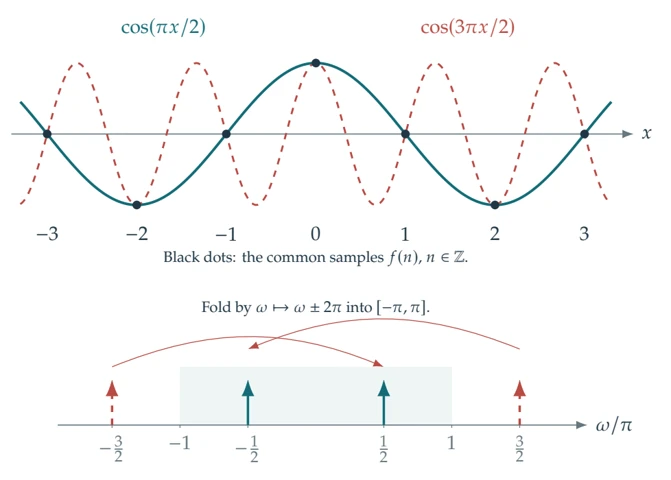 Sampling and aliasing
Sampling, aliasing, and the reconstruction of continuous signals.
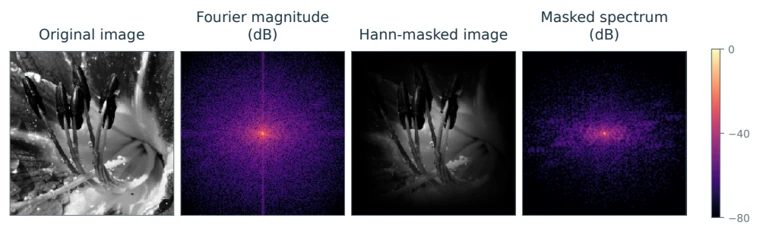 Image spectra
Fourier representations, convolution, filtering, and the discrete transform.
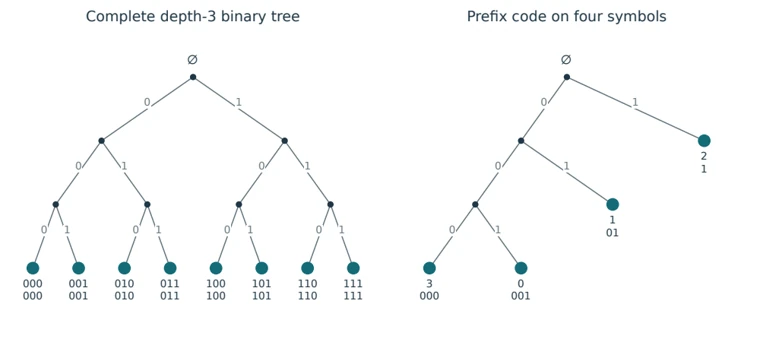 Prefix codes
Entropy, prefix codes, Huffman coding, and block coding.
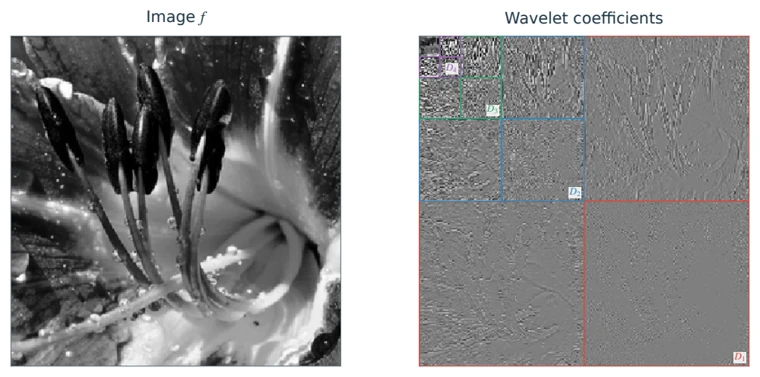 Wavelet coefficients
Multiresolution analysis, filter banks, and wavelet representations.
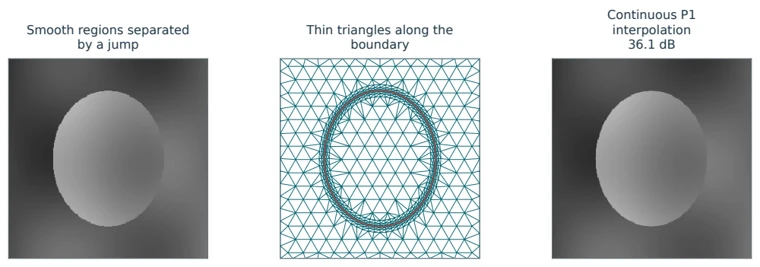 Adaptive approximation
Coefficient selection, approximation rates, and geometric image models.
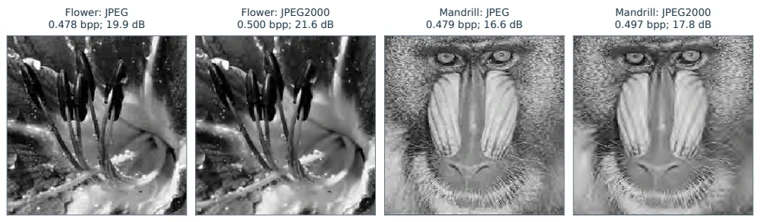 Image compression
Quantization, source models, and image compression.
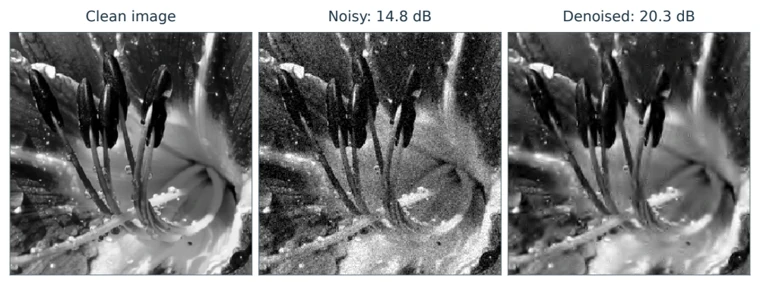 Removing noise
Noise models, filtering, and wavelet thresholding.
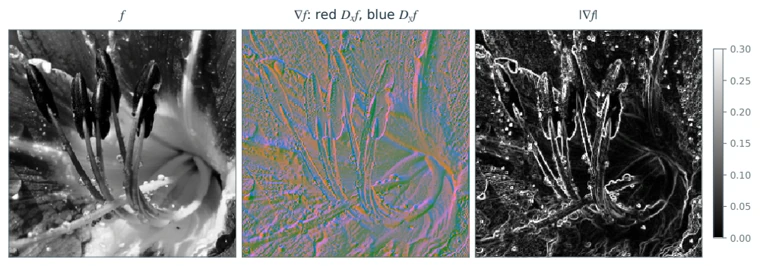 Image gradients
Image gradients, diffusion, and total-variation regularization.
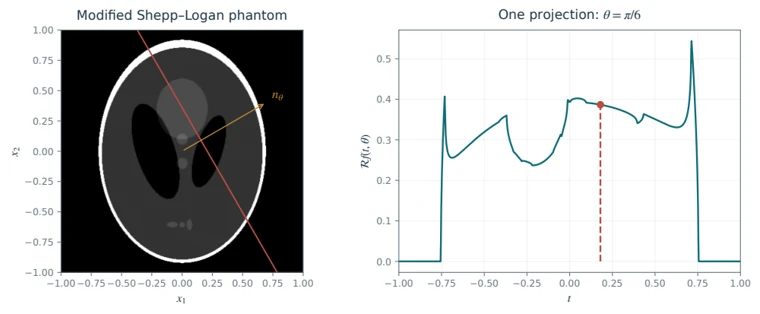 Tomographic projections
Observation operators, reconstruction, and ill-posed problems.
 The geometry of sparsity
Sparse models, regularization paths, and iterative reconstruction.
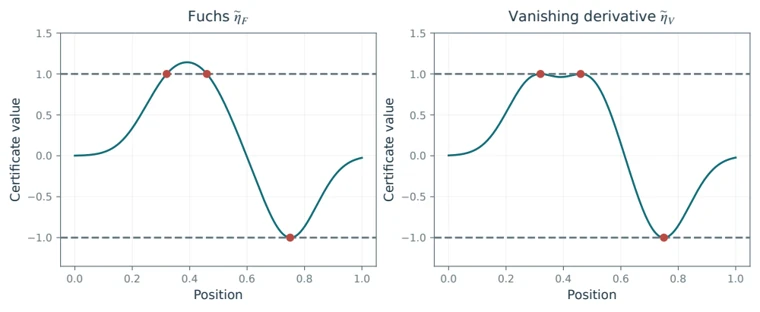 Recovery certificates
Dual certificates, recovery conditions, and stability.
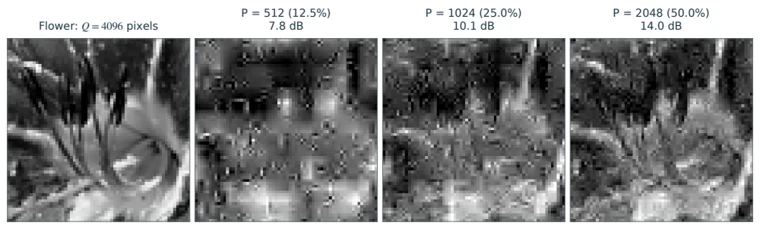 Fewer measurements
Random measurements and reconstruction from incomplete data.
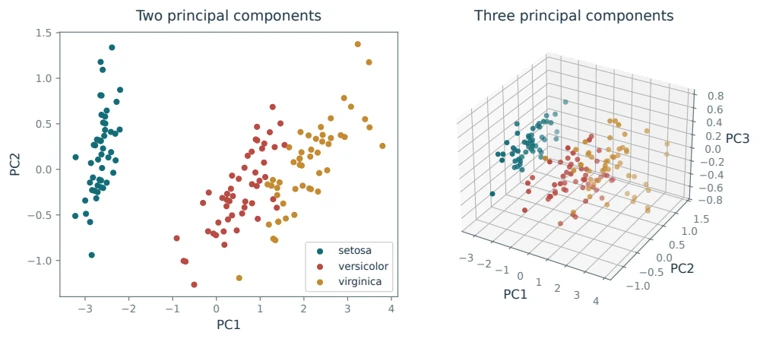 Principal components
Principal components, clustering, regression, and classification.
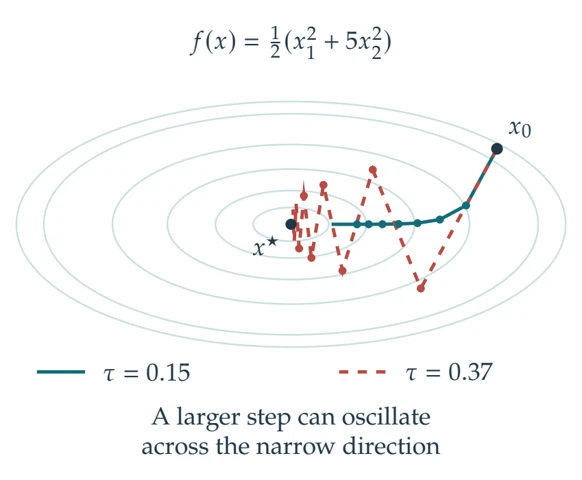 Gradient descent
Gradient descent, smoothness, convexity, and convergence.
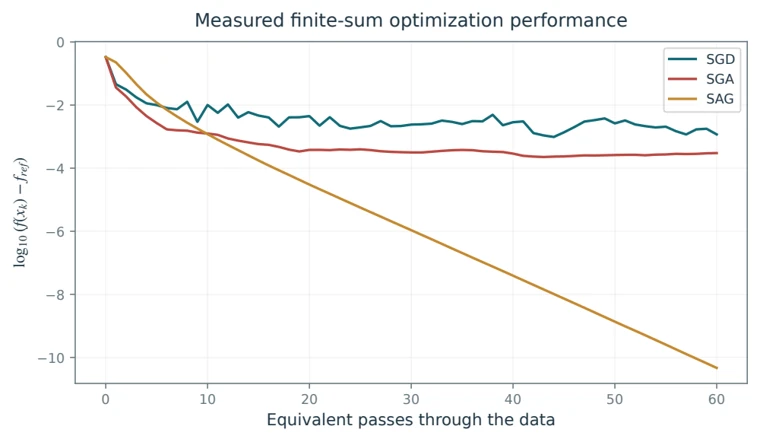 Stochastic optimization
Stochastic, accelerated, and second-order optimization methods.
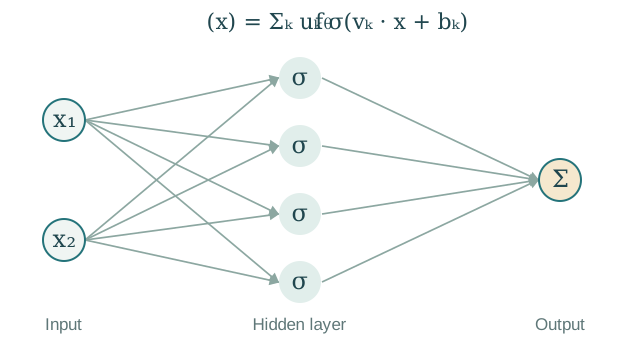 One hidden layer
Perceptrons, shallow neural networks, and approximation.
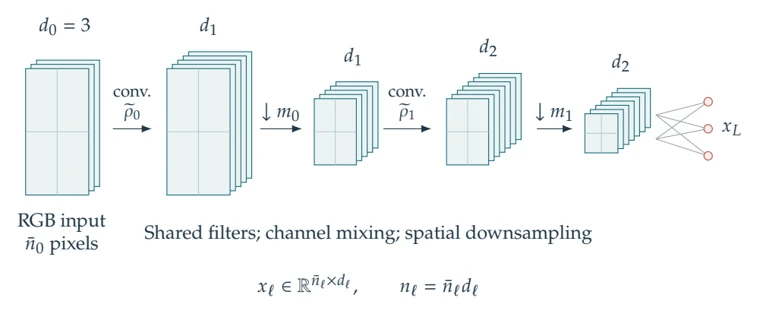 Convolutional networks
Deep networks, backpropagation, and learned representations.
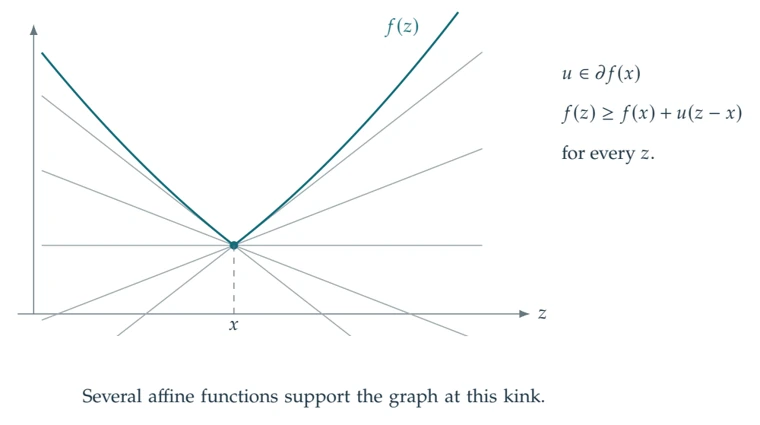 Supporting hyperplanes
Convex sets and functions, subgradients, and duality.
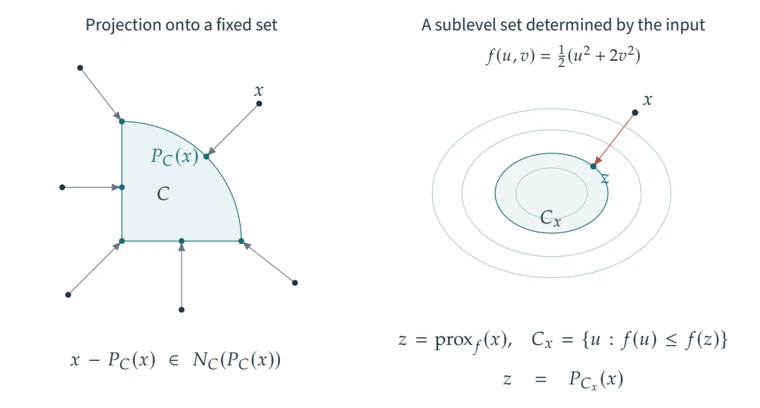 Proximity and projection
Proximity operators, splitting methods, and nonsmooth objectives.
No chapters match these filters.
This book develops the mathematical foundations behind signal and image processing, inverse problems, and machine learning. Linear operators, nonlinear approximation, and convex optimization provide a common language for understanding the methods and turning them into algorithms.
It is written as a companion to the Numerical Tours of Data Sciences. The interactive edition follows the same chapters and lets you change parameters, compare methods, and inspect the figures alongside the mathematics.
Companion material
Computational tours that put the book’s mathematical ideas into practice through detailed implementations.
Explore the Numerical ToursOT4ML: Optimal Transport for Machine Learners. A dedicated book with an interactive edition and teaching resources.
Explore OT4ML