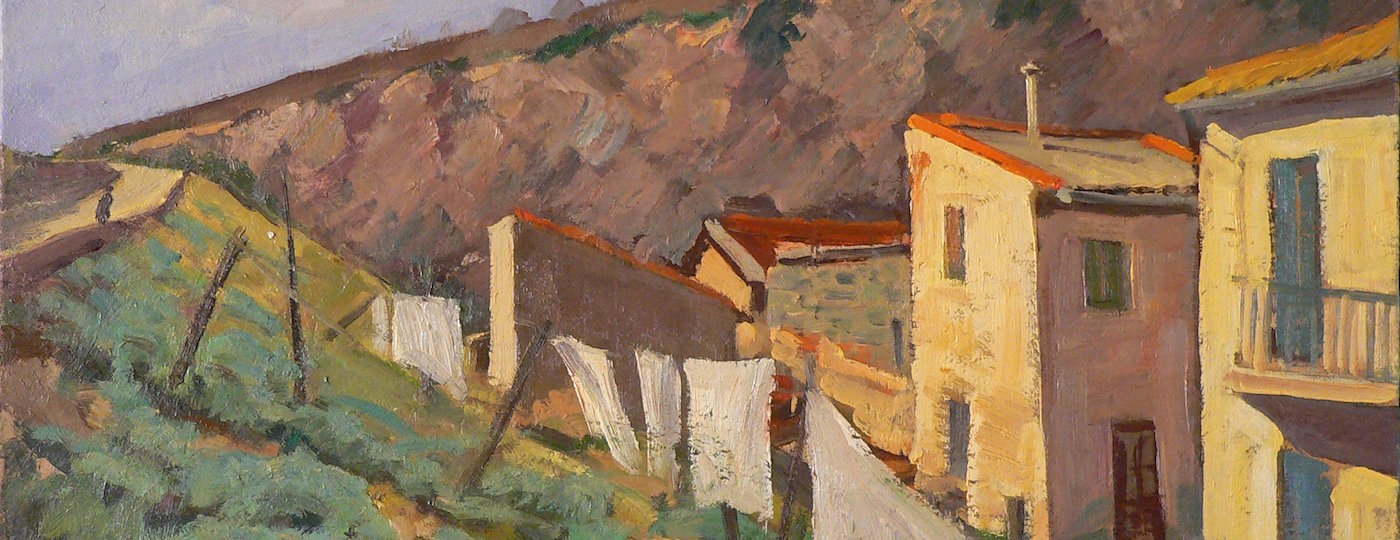
Colorful houses and hills in a painting by Louis Peyré
Painting detail by Louis Peyré (1923–2012)About the paintings

Companion resources

Course slides

Two collections for teaching and review. Follow a course in order, or open the deck for the topic you need.

17 slide decks2 course collectionsPreviews from Gabriel Peyré’s slides on Speaker Deck

Signal & image processing

A progression from orthogonal representations to denoising, inverse problems, and sparse recovery.
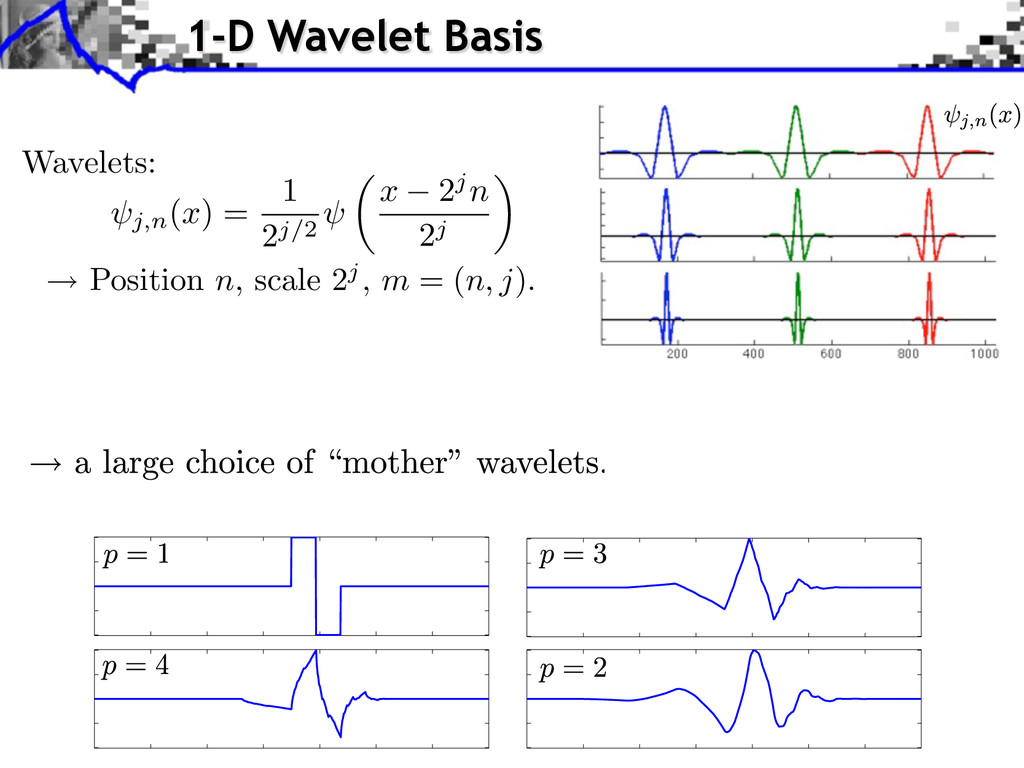
  1. Translated and dilated wavelets and several wavelet familiesSlide 12

    Overview: a Sparse Tour of Signal Processing

    An overview of sparse representations and their role in imaging.

    Open the slides
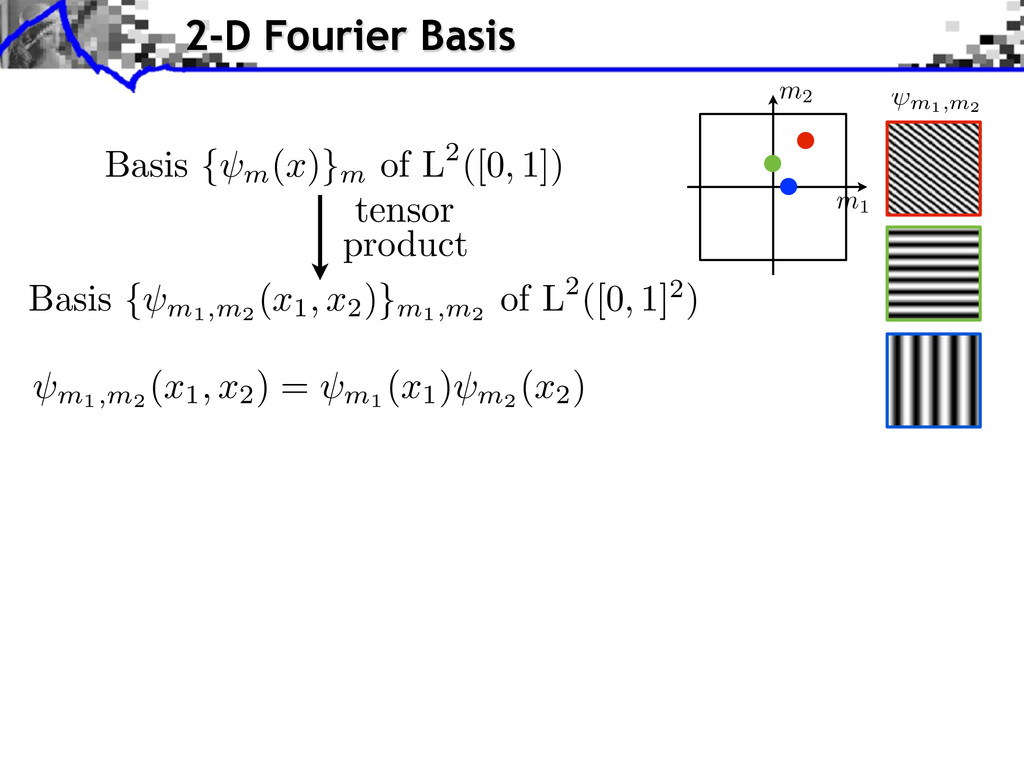
  2. Horizontal, vertical, and diagonal Fourier basis functionsSlide 13

    Signal and Image Processing with Orthogonal Decompositions

    Represent signals in orthogonal bases and connect coefficients to processing tasks.

    Open the slides
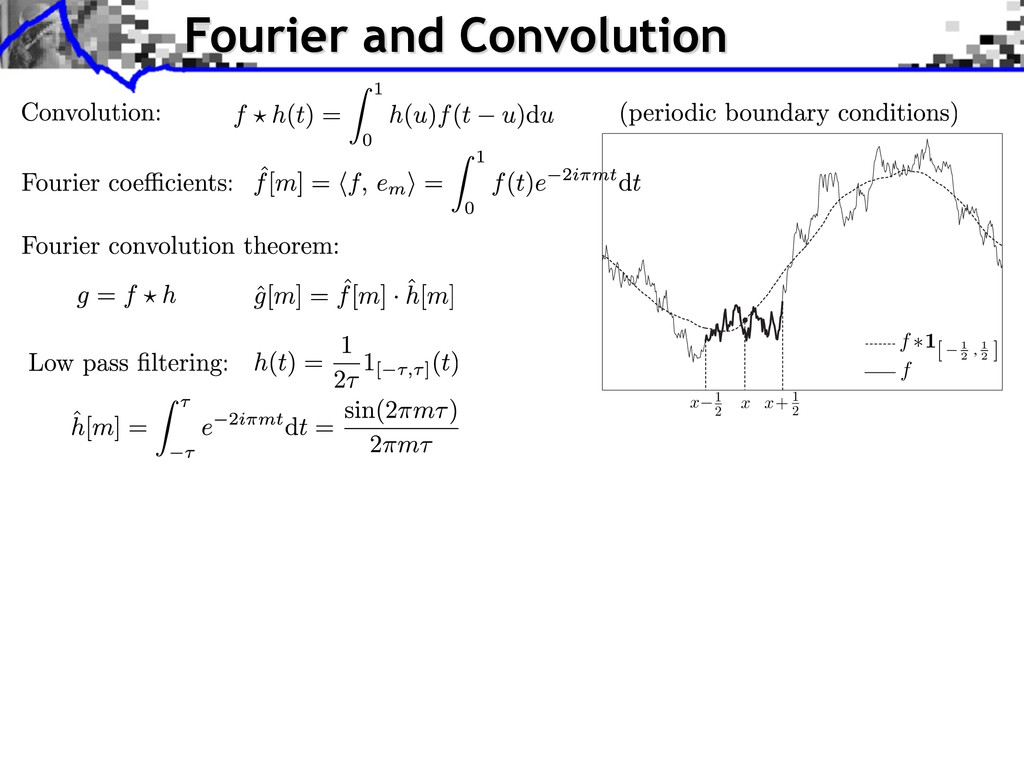
  3. A signal and its smoothed running averageSlide 6

    Fourier Processing

    Use Fourier representations to understand convolution and frequency filtering.

    Open the slides
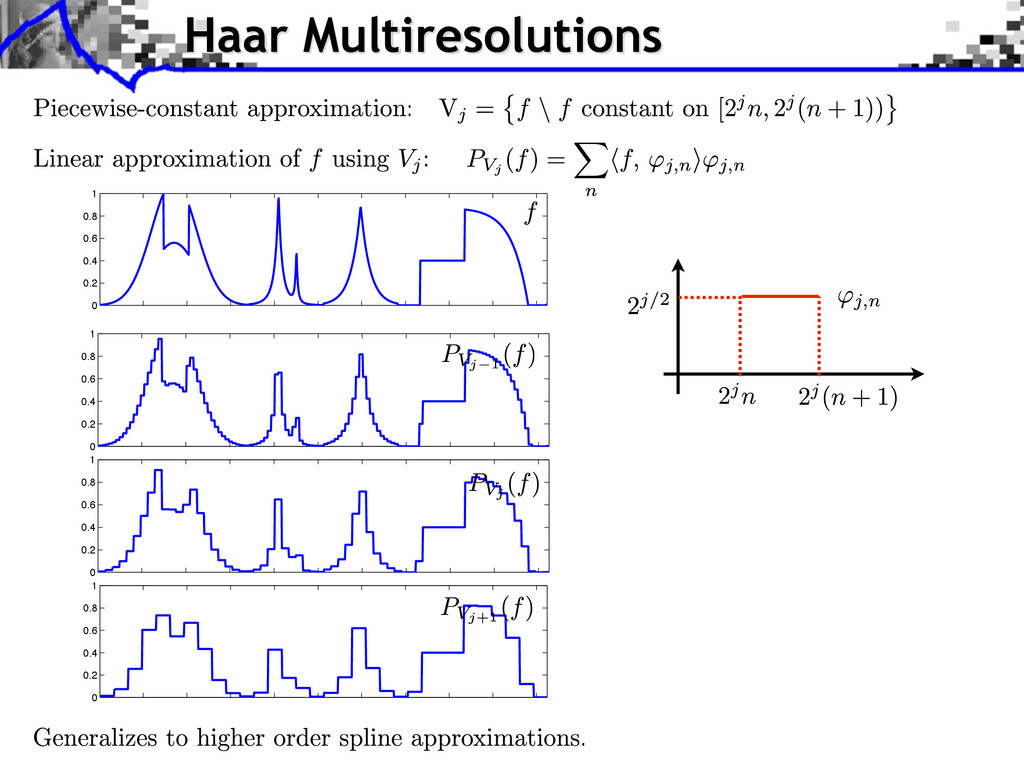
  4. Successive Haar approximations to a signalSlide 11

    Wavelet Processing

    Move between scales with wavelets and multiresolution representations.

    Open the slides
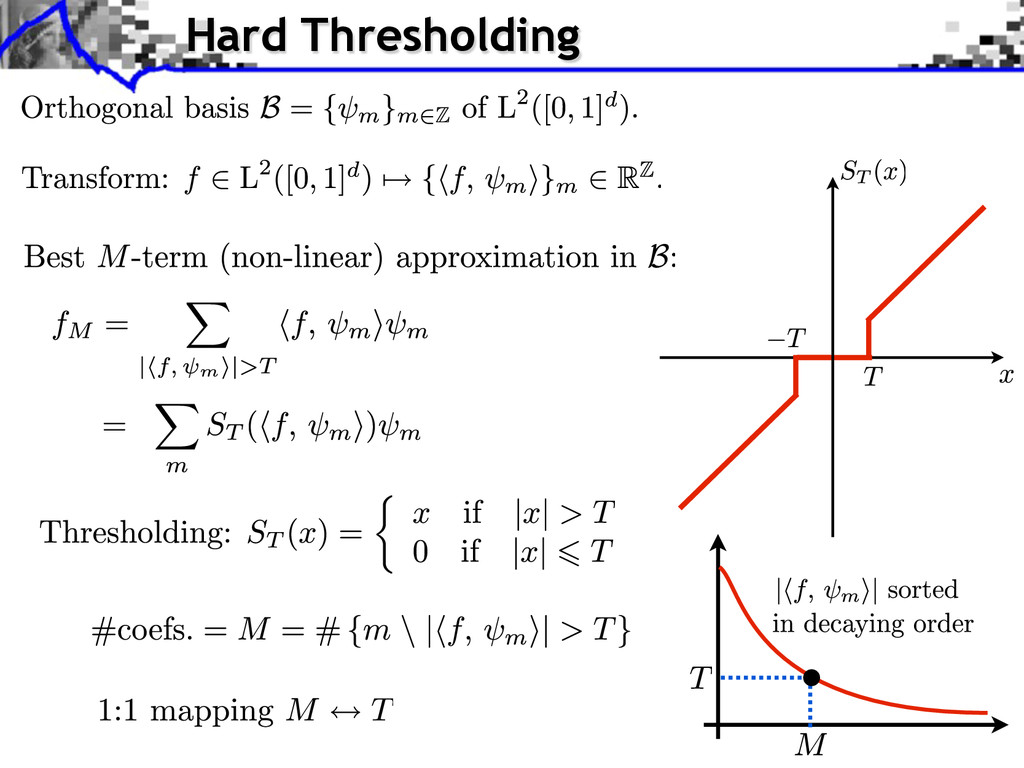
  5. Hard-thresholding curves and sorted coefficient magnitudesSlide 6

    Approximation and Coding with Orthogonal Decompositions

    Select and encode coefficients for approximation and compression.

    Open the slides
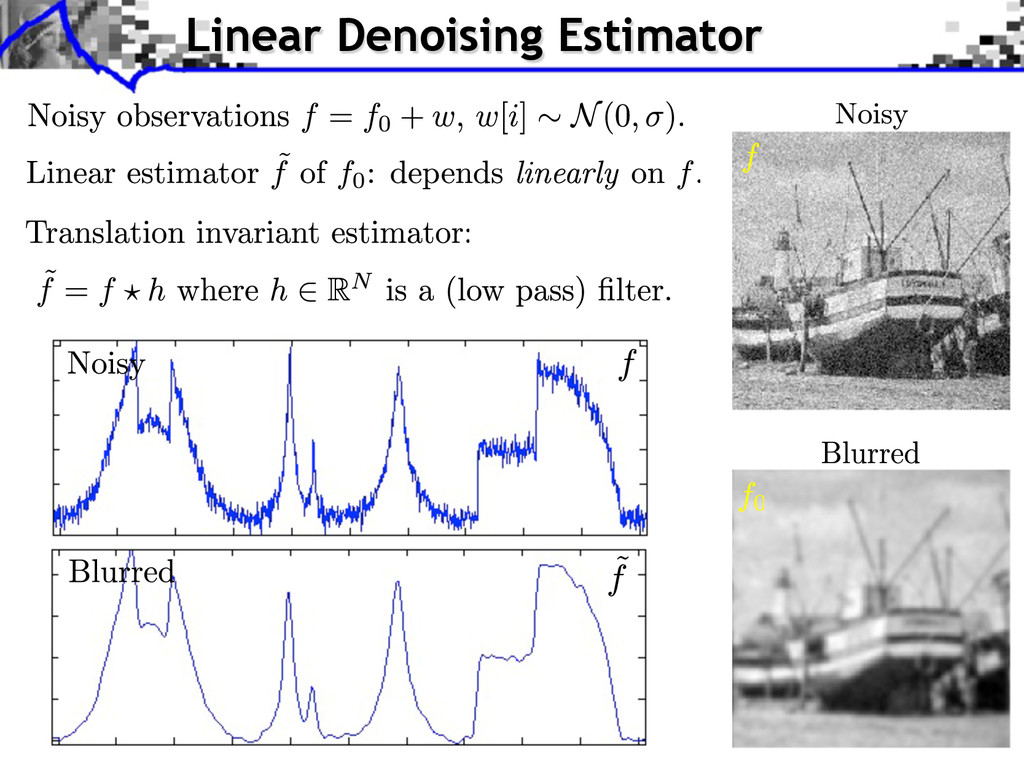
  6. Noisy and filtered signals and boat imagesSlide 12

    Linear and Non-linear Denoising

    Compare linear filters with nonlinear methods for removing noise.

    Open the slides
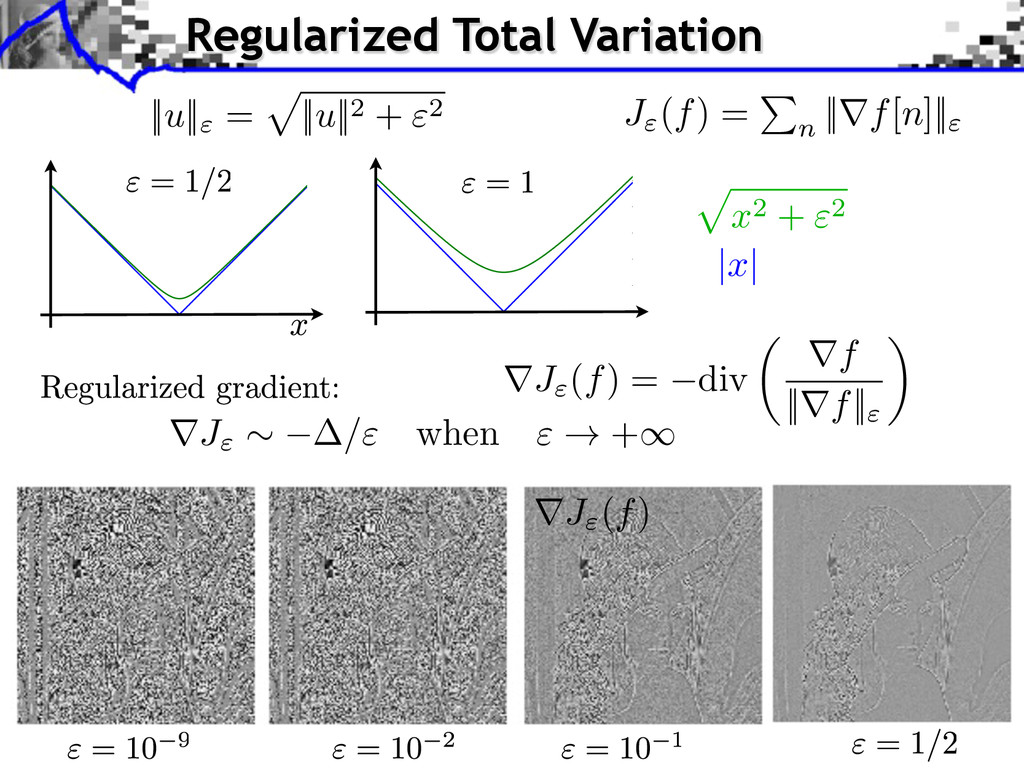
  7. Regularized total variation and its action on noiseSlide 20

    Variational Regularization of Inverse Problems

    Recover images by combining a data term with a regularity penalty.

    Open the slides
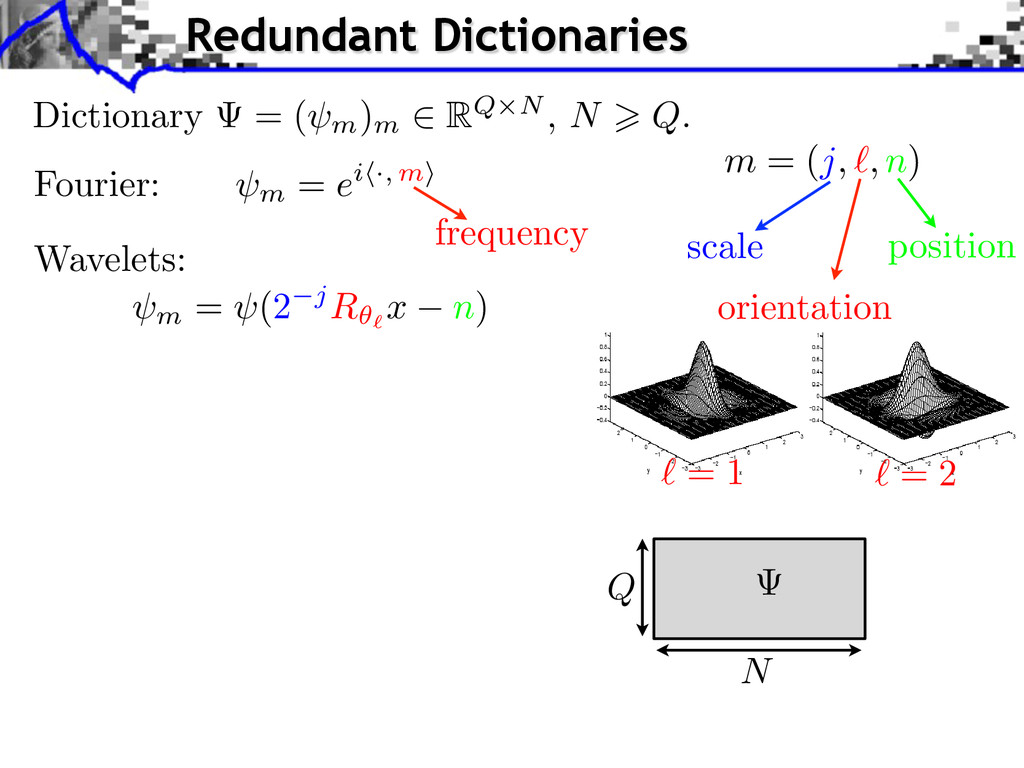
  8. Translated and dilated atoms in a redundant dictionarySlide 20

    Sparse Regularization of Inverse Problems

    Use sparsity to reconstruct signals from incomplete or degraded observations.

    Open the slides
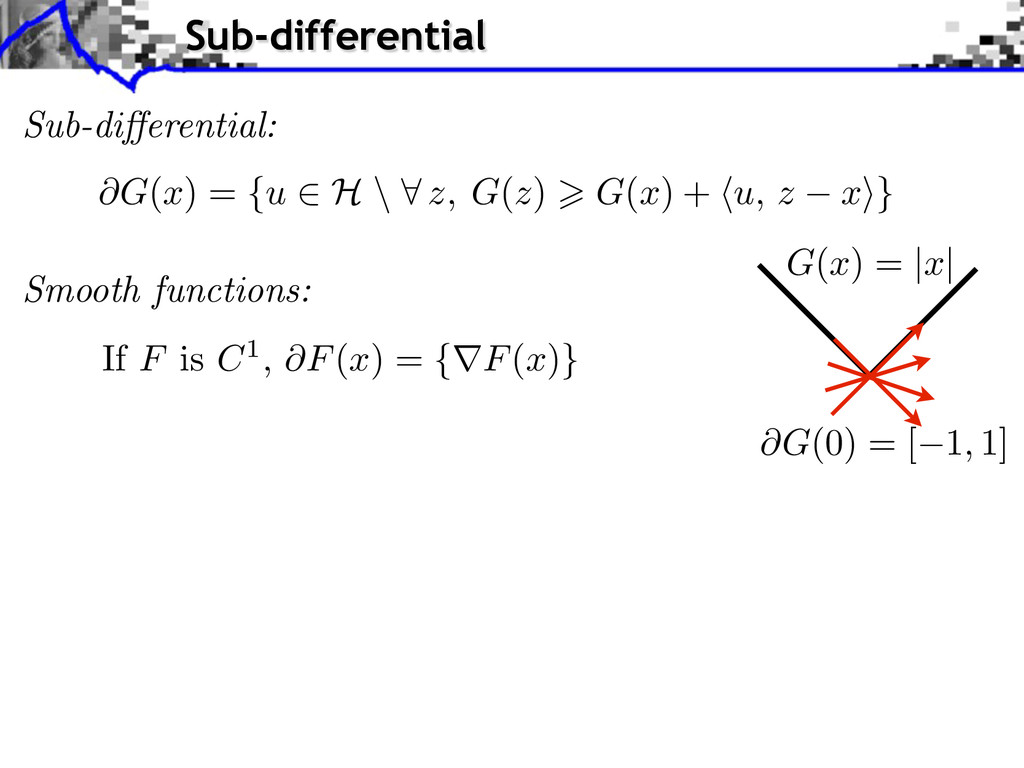
  9. Supporting lines and the subdifferential of the absolute valueSlide 12

    Convex Optimization for Imaging

    Work with convex objectives and algorithms for imaging problems.

    Open the slides
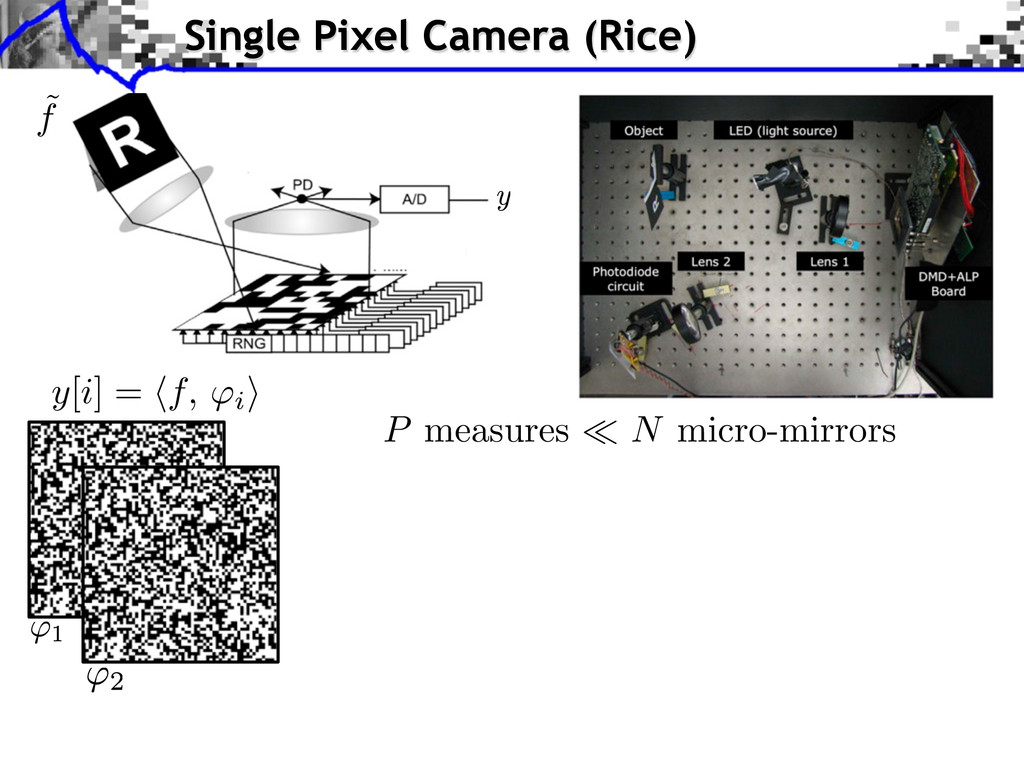
  10. A single-pixel camera and its coded measurementsSlide 12

    Compressed sensing

    Reconstruct sparse signals from a small number of measurements.

    Open the slides
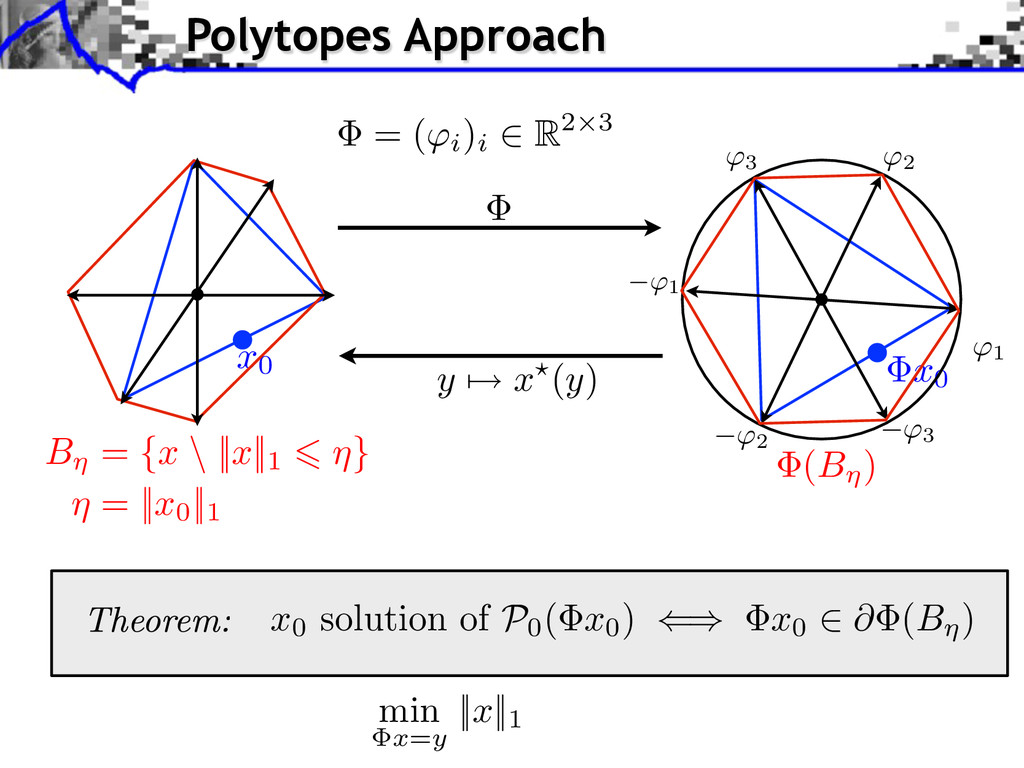
  11. Polytopes and the geometry of sparse recoverySlide 10

    Sparse ℓ¹ recovery

    Understand when ℓ¹ minimization recovers sparse solutions.

    Open the slides

Geometry & mesh processing

Differential and geodesic tools for understanding, sampling, and processing surfaces.
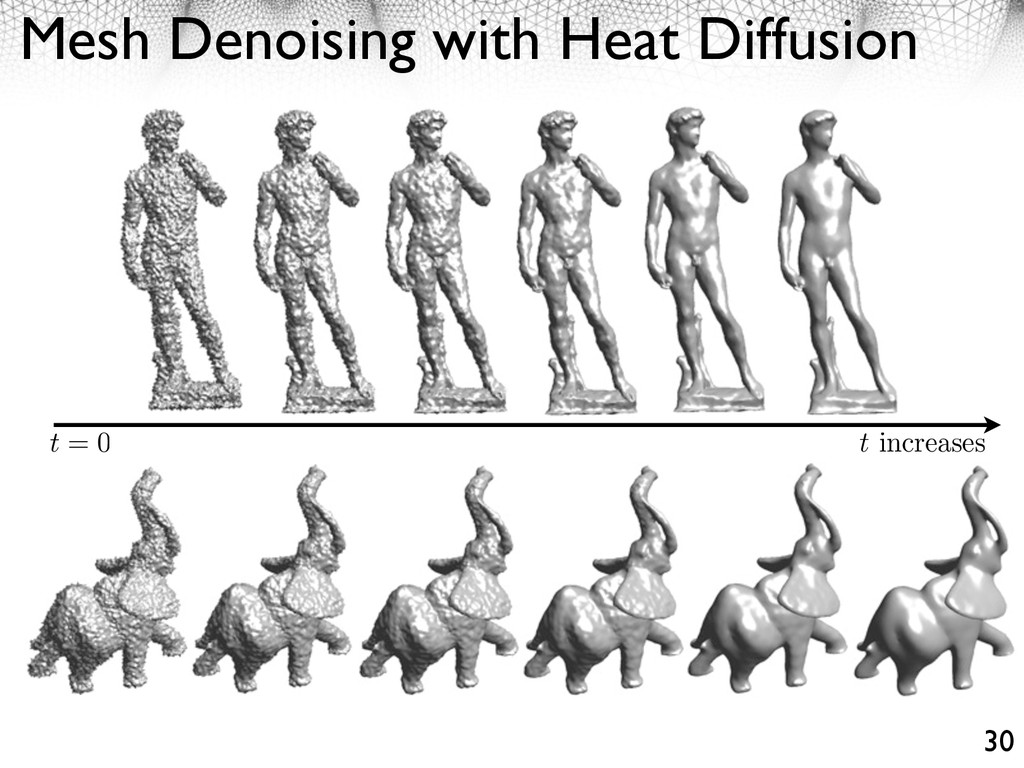
  1. Mesh denoising by heat diffusion on human and animal shapesSlide 55

    Differential Mesh Processing

    Study discrete differential operators and smoothing on triangular meshes.

    Open the slides
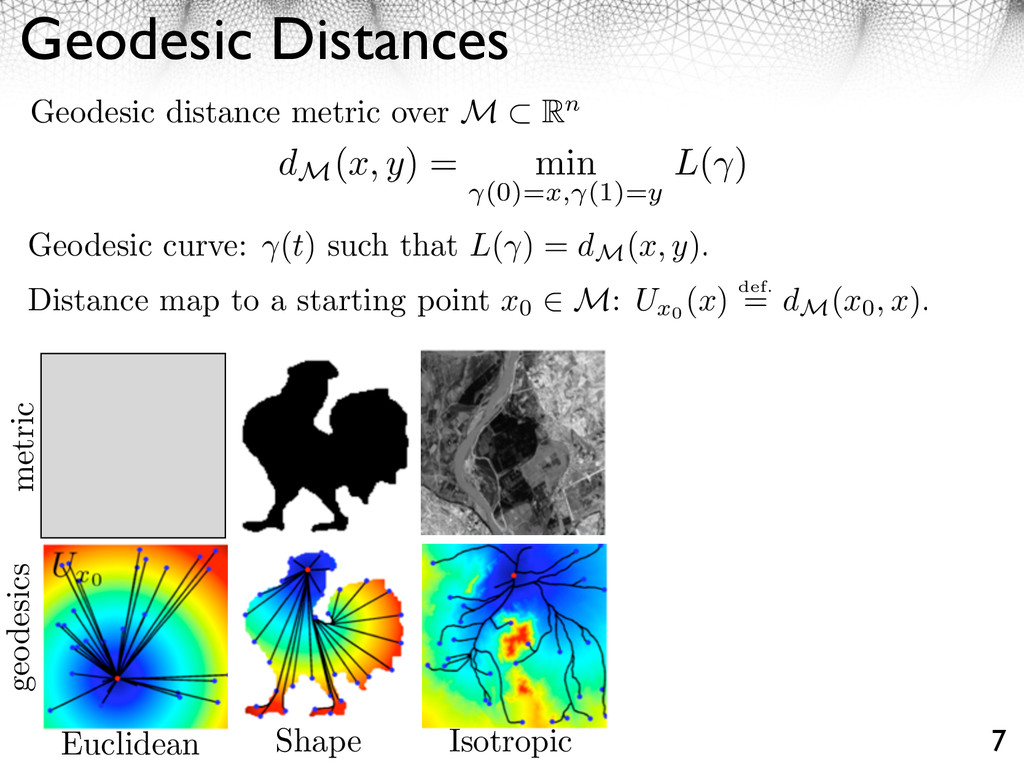
  2. Geodesic distances for Euclidean, shape, isotropic, and tensor metricsSlide 20

    Geodesic Mesh Processing

    Measure distances and compute shortest paths on surfaces.

    Open the slides
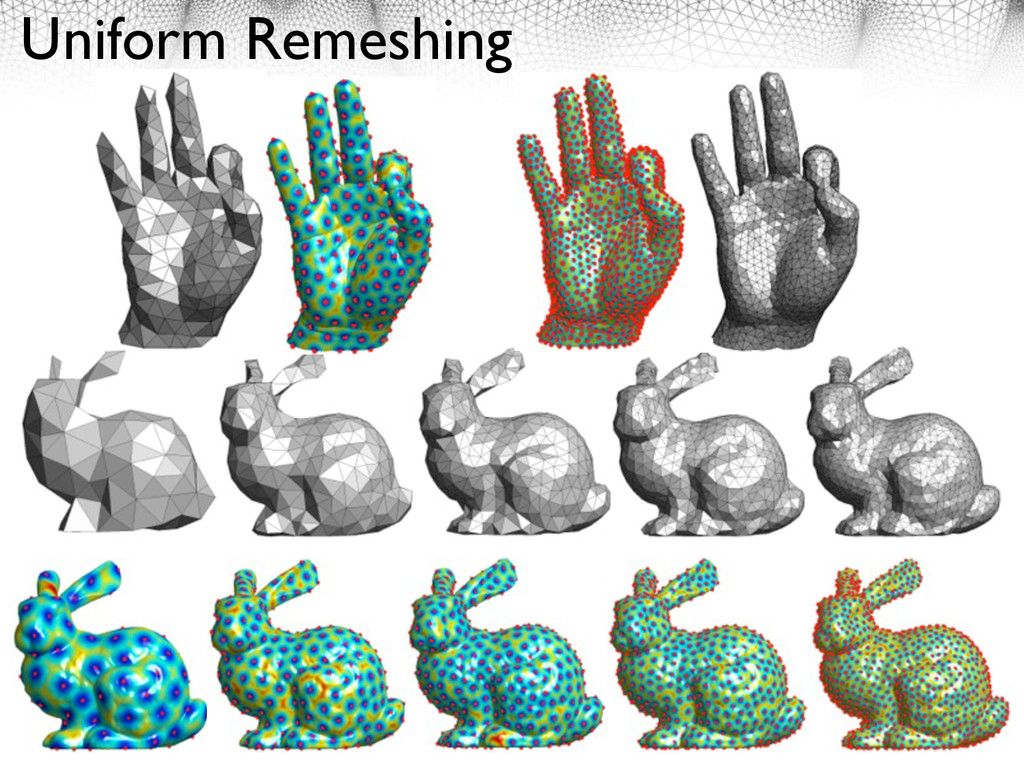
  3. Uniform remeshing of hand and rabbit surfacesSlide 20

    Geodesic Sampling and Meshing

    Distribute points and construct meshes using geodesic distances.

    Open the slides
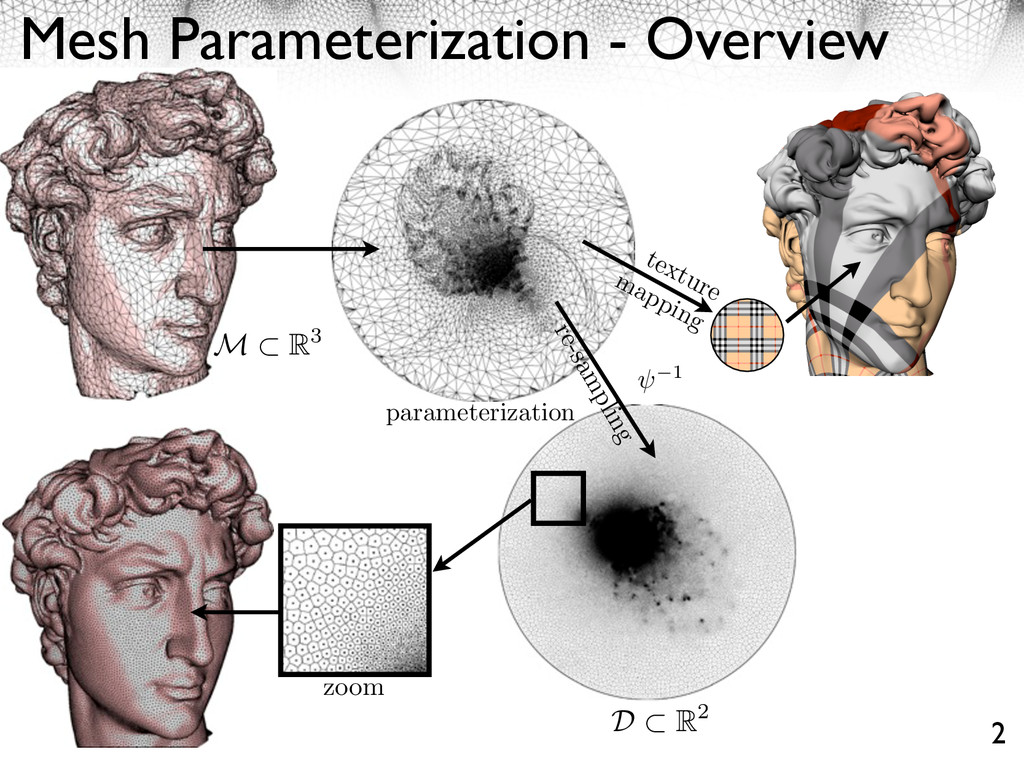
  4. Surface parameterization and texture mapping on a sculpted headSlide 3

    Surface Parameterization

    Flatten a surface and control the distortion of its planar representation.

    Open the slides
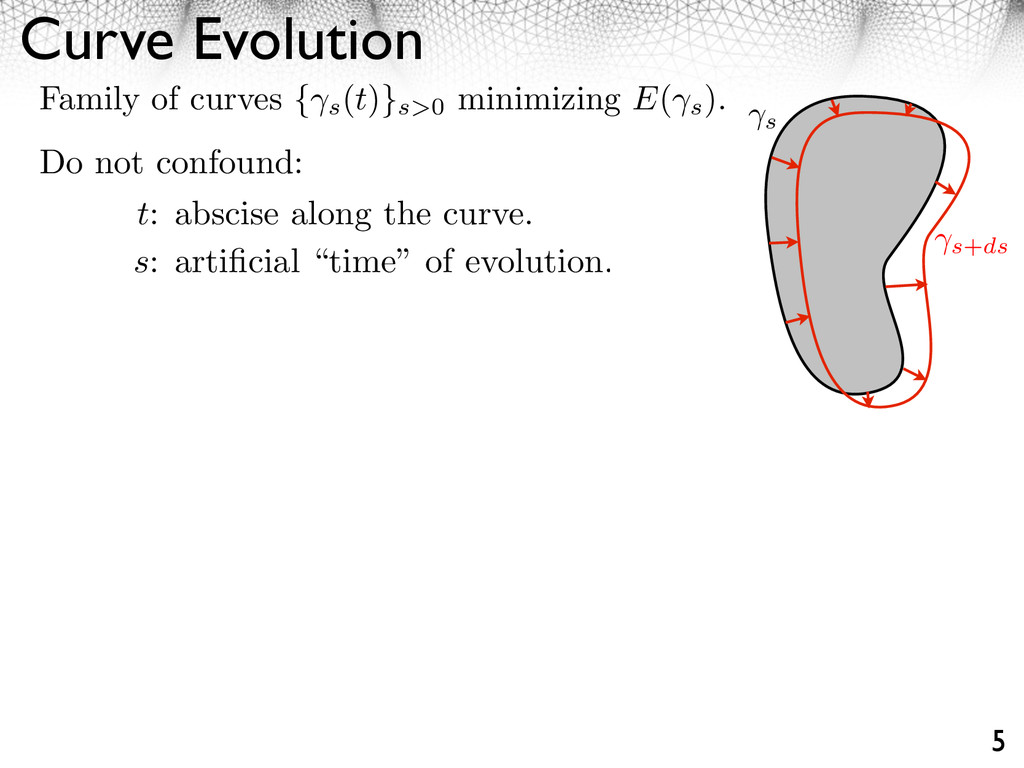
  5. A contour moving in its normal directionSlide 6

    Active Contours

    Evolve curves to detect boundaries and segment images.

    Open the slides
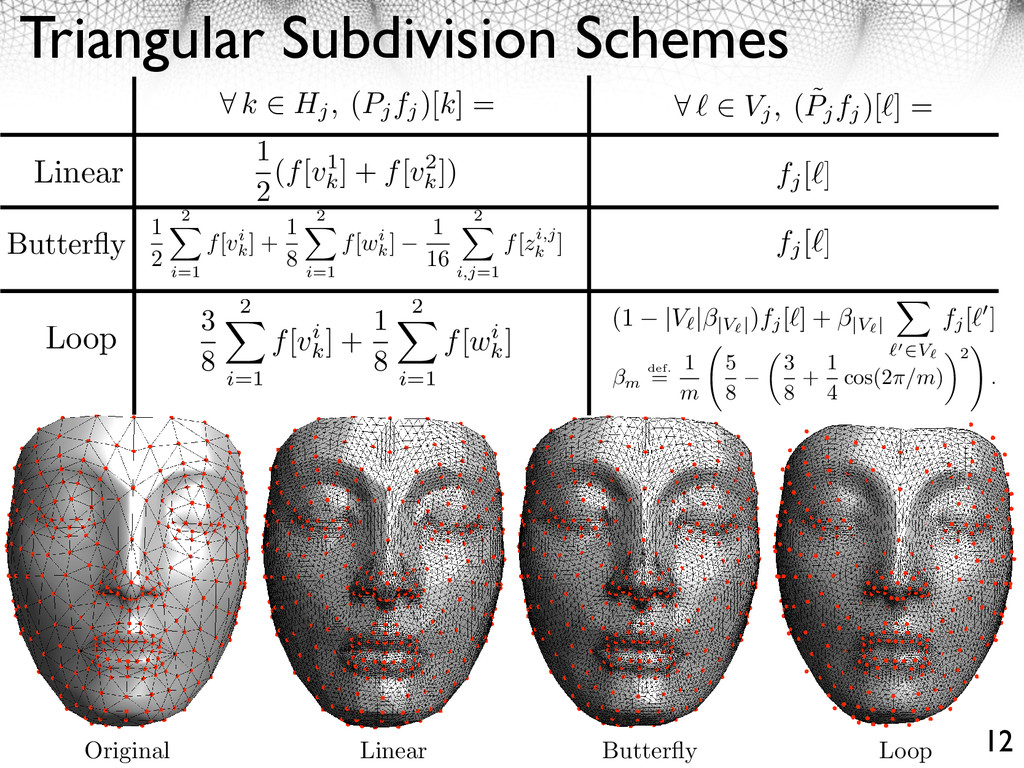
  6. Triangular subdivision schemes applied to a maskSlide 12

    Multiresolution Mesh Processing

    Represent and process geometry across multiple resolutions.

    Open the slides
For the mathematical development behind the signal-processing course, read Mathematical Foundations of Data Sciences. For neural networks, generative models, and optimal transport, follow the ten-lecture machine-learning course.